Who was Müslüm Gürses? (Father) Bio & Death

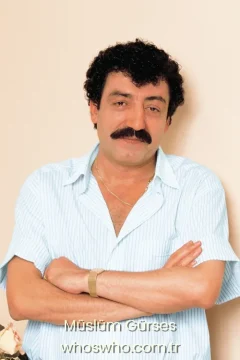
Müslüm Gürses was a legendary Turkish singer whose deeply emotional voice and distinctive interpretation of arabesque music earned him a devoted following and enduring status as one of Türkiye's most iconic musicians. He was born on May 7, 1953 in Şanlıurfa,Turkey. his zodiac sign was Taurus. He died on March 3, 2013 at the age of 59.
Müslüm Gürses's Biography Score and Ranking Status on Our Website
The legendary Turkish singer, actor, and cultural icon Müslüm Gürses, born Müslüm Akbaş and affectionately known to his devoted audience as “Müslüm Baba,” established a foundational and permanent legacy across the Turkish music industry, commercial cinema, and multi-generational folk culture. Born on May 7, 1953, in the Fıstıközü village of Halfeti, Şanlıurfa, Türkiye, he spent his early childhood in rural Southeastern Türkiye before his family relocated to Adana due to severe financial struggles. Navigating immense personal tragedies during his youth, including the tragic losses of his brother and mother, he balanced his family obligations with a deep passion for traditional folk melodies, transitioning into one of the most emotionally evocative vocalists in Turkish History.
Musical Debuts, Adana Roots, and Early Recording Milestones
Müslüm Gürses began his vocal performance journey during his adolescence in 1965, participating in local talent competitions held in Adana under the guidance of early musical mentors. His formal breakthrough materialized in 1967 when he won first place at the Adana Community Center (Halkevi) singing competition. Alongside his early practice of traditional folk arrangements, he completed an apprenticeship in a local tailor shop before releasing his initial commercial single, Emmioğlu/Derdimi Kimlere Desem, in 1968 under the Palandöken Plak label, which established his initial popularity across regional networks.
Following his relocation to İstanbul, Müslüm Gürses consolidated his recording profile by collaborating with prominent music producers, finalizing a distribution agreement with Hülya Plak. He achieved widespread national recognition through his 1969 hit single Sevda Yüklü Kervanlar, which sold over 300,000 physical copies and anchored his powerful voice within the rising arabesk musical movement. His career survived a catastrophic automobile accident in 1978 that left him clinically dead for days and caused permanent skull injuries, impaired hearing, and altered speech mechanics. Rather than ending his musical journey, this physical trauma added a unique, deep vulnerability to his vocal technique, intensifying the emotional resonance of his subsequent studio albums.
The Arabesk Phenomenon, Cult Devotion, and Elenor Müzik Legacy
During the 1980s and 1990s, Müslüm Gürses achieved unprecedented mainstream dominance, establishing a highly loyal, sub-cultural fan base whose intense devotion became a subject of major sociological and academic research. Working primarily under the production umbrella of Muhteşem Candan’s Elenor Müzik label, he compiled major studio masterpieces, including Yıkılan Duvarlar, Gitme, and Müslümce’92. His performances of iconic tracks like Usta, Senden Vazgeçmem, and Meselem functioned as powerful anthems for marginalized, working-class urban populations navigating rapid modernization and economic transitions.
The framework of his musical career was heavily supported by his regular appearances in commercial Turkish cinema. He expanded his multi-platform portfolio by starring in over 30 feature-length films, including popular melodramatic musical features such as İsyankâr (1979), Bağrıyanık (1980), and Mutlu Ol Yeter (1981). In these cinematic narratives, his characters frequently mirrored his real-world persona, portraying emotionally heavy, honorable, and suffering singers. He shared the screen with prominent actors, including Oya Aydoğan and Behçet Nacar, utilizing his musical scores to drive the high-stakes emotional plot lines of domestic theaters.
Radical Artistic Transition and Cross-Genre Collaborations
Seeking to continuously diversify his artistic range during the final decade of his recording career, Müslüm Gürses executed a radical, highly successful stylistic transition that bridged alternative pop, classical rock, and mainstream arabesk. He initiated this evolutionary phase through a strategic partnership with the prominent Turkish Author and lyricist Murathan Mungan, culminating in the release of the 2006 concept studio album Aşk Tesadüfleri Sever (Love Loves Coincidences), published by Pasaj Müzik. The album featured technical Turkish interpretations of iconic international compositions, including works by Bob Dylan, Leonard Cohen, and David Bowie, earning him universal praise from alternative music critics.
His contemporary musical success expanded further through studio collaborations with pop icons like Tarkan and rock vocalist Şebnem Ferah. He delivered critically acclaimed covers of pop anthems, including Sezen Aksu’s Paramparça and Nilüfer’s Sensiz Olmaz, compiled across consecutive albums like Sandık (2009) and Yalan Dünya (2010). His ability to reinvent his performance profile allowed him to transition from traditional music halls into elite open-air amphitheaters in İstanbul and Bodrum, drawing a completely new, younger demographic into his audience.
Physical Profile, Marriage with Muhterem Nur, and Enduring Legacy
Müslüm Gürses stood at a height of 1.80 meters (5 feet 11 inches) and maintained a weight of approximately 82 kilograms (180 lbs) during his active career. He married the legendary Turkish cinema actress Muhterem Nur (born Olga Kristina) in 1986, constructing an exemplary personal and professional partnership that spanned nearly three decades until his passing. The duo maintained a highly publicized bond, with Nur managing his career choices and public image. The couple had no biological children, dedicating their private life in İstanbul entirely to their collaborative artistic legacy.
His long-term financial profile was sustained by extensive physical and digital catalog distribution, concert revenues, and major commercial brand partnerships. His life journey concluded on March 3, 2013, when he passed away at the age of 59 due to complex heart and lung failure following a multi-month medical treatment period at İstanbul Memorial Hospital. His remains were buried within the historical grounds of the Zincirlikuyu Cemetery. His life chronology was later introduced to global audiences through the massive biographical feature film Müslüm (2018), produced by Mustafa Uslu, where his youth was portrayed by Şahin Kendirci and his adult life was performed by Timuçin Esen, cementing his memory as an enduring symbol of authentic human resilience and vocal brilliance.
Müslüm Gürses – Frequently Asked Questions (FAQ)
Müslüm Gürses Songs and Lyrics
Check out our 1953 born celebrities page to discover Müslüm Gürses and other notable people born in the same year.