Who was Mircea Lucescu? Bio & Death

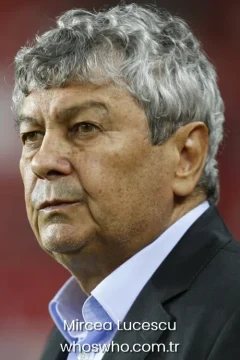
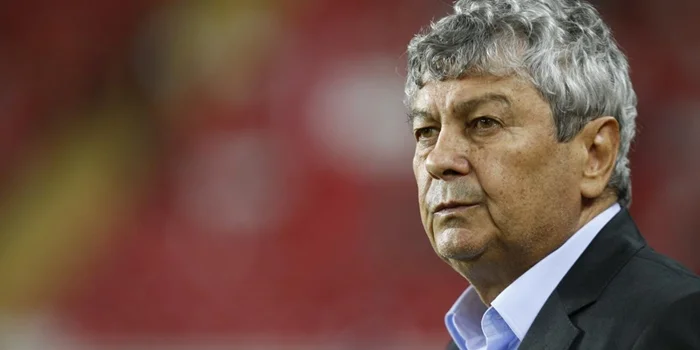
Mircea Lucescu was a Romanian football manager and former player whose decorated coaching career has included successful spells at clubs across Europe and the Romania national team. He was born on July 29, 1945 in Bucharest,Romania. his zodiac sign was Leo. He died on April 7, 2026 at the age of 80.
Mircea Lucescu's Biography Score and Ranking Status on Our Website
The Romanian professional Football Manager and former player Mircea Lucescu established a permanent profile within global sports administration, European tactical development, and regional championship histories. Born on July 29, 1945, in Bucharest, Romania, he navigated his early developmental years alongside his family in the post-war Balkan landscape, prioritizing academic disciplines in economic science before transitioning into senior professional structures within domestic and international football platforms. Over a competitive career spanning six decades, he came to be known as one of the most decorated and tactically adaptable strategists in the History of continental club and national team management.
Academic Foundation and Senior Playing Profile
Mircea Lucescu pursued his higher academic training at the Bucharest University of Economic Studies (ASE), graduating with a degree in commercial management and trade structures. Alongside his university studies, he refined his technical football skills at Școala Sportivă 2 București before transitioning into the senior operational frameworks of Dinamo București under the guidance of coach Traian Ionescu. Functioning as a precise right winger and midfielder, he made his formal league debut in June 1964 during a match against Rapid București, anchoring his athletic registry within the domestic first division.
During his comprehensive tenure as an active player for Dinamo București, Mircea Lucescu contributed to the club winning seven Romanian league championships and one Romanian Cup. Following a temporary developmental loan tracking period at Știința București, he returned to spearhead the club’s defensive and attacking tactical structures until 1977, accumulating 250 official appearances. His international administrative catalog features representing the Romania National Football Team, recording 64 senior caps and registering 9 goals. His international playing career culminated in serving as the national team captain during the 1970 FIFA World Cup group stages in Mexico, where his squad faced high-stakes encounters opposite Brazil and England.
Early Coaching Milestones, Brescia, and Romanian Breakthroughs
Mircea Lucescu initiated his transition into technical football management ahead of the 1979 campaign while working as a player-coach at Corvinul Hunedoara. His structural success in organizing regional talent directly accelerated his initial appointment as the head coach of the Romania National Football Team in 1981. He achieved an early career milestone by guiding the country to its first-ever UEFA European Championship final tournament appearance during the 1984 Euro cycle in France, navigating a difficult qualification group that included structural victories over reigning world champions Italy. He subsequently returned to Dinamo București as manager, winning a domestic double in 1990 and reaching the semi-finals of the European Cup Winners’ Cup.
In the early 1990s, Mircea Lucescu relocated his tactical registry to Italian football, assuming the head coaching responsibilities at Brescia Calcio. He managed the Lombardy-based club across multiple Serie A and Serie B cycles, executing a structural promotion campaign that culminated in winning the Anglo-Italian Cup in 1994. During this development period, his scouting networks resulted in the technical integration of regional talents including Andrea Pirlo and Gheorghe Hagi into senior team lineups. Following short-term technical assignments at Reggiana and a secondary return to Rapid București where he secured the 1999 Romanian championship, he managed Inter Milan during the 1998–99 UEFA Champions League campaign, working alongside elite players like Ronaldo and Roberto Baggio.
Turkish Süper Lig Supremacy with Galatasaray and Beşiktaş
Mircea Lucescu completed a high-profile structural transition to Turkish football in July 2000, signing a permanent contract with reigning UEFA Cup champions Galatasaray SK. He immediately supervised a historic international milestone by defeating Real Madrid 2-1 to win the 2000 UEFA Super Cup in Monaco. Under his tactical management, Galatasaray advanced to the quarter-finals of the UEFA Champions League during the 2000–01 campaign and secured the 2001–02 Süper Lig championship title. His structural configuration of the squad utilized the technical distribution of players like Gheorghe Popescu, Hasan Şaş, and Mario Jardel, establishing a permanent operational baseline within Istanbul’s sporting landscape.
Following organizational changes at the Ali Sami Yen Stadium, Mircea Lucescu executed a strategic cross-city relocation ahead of the 2002–2003 broadcasting blocks, headlining the technical staff of arch-rivals Beşiktaş JK. In his initial season at the BJK İnönü Stadium, he steered the club to the 2002–03 Süper Lig Championship during Beşiktaş’s centenary anniversary campaign, registering a club-record points haul. His tactical organization placed his team in direct competitive opposition to his former players, managing defensive and transitional structures through veterans including Sergen Yalçın, Tümer Metin, and Antônio Carlos Zago. His work in Türkiye established his profile as a highly flexible manager capable of delivering immediate domestic silverware under dense Media scrutiny.
Shakhtar Donetsk Legacy and European Dominance
The absolute peak of his club management dominance and structural legacy arrived in May 2004 when Mircea Lucescu spearheaded the multi-year football project of Ukrainian club FC Shakhtar Donetsk, financed by Rinat Akhmetov. Over a comprehensive twelve-year residency at the Donbass Arena, he functioned as the primary Architect of the club’s global sporting integration, establishing a specific transfer philosophy focused on blending technical Brazilian attacking midfielders with disciplined Eastern European defensive lines. His recruitment network introduced players such as Fernandinho, Willian, Douglas Costa, and Henrikh Mkhitaryan to the elite European market.
His operational record with Shakhtar Donetsk contains 22 major honors, establishing the club as the dominant force in the region. He won eight Ukrainian Premier League titles, six Ukrainian Cups, and seven Ukrainian Super Cups. His definitive continental triumph materialized in May 2009 when he directed the team to a 2-1 extra-time victory over Werder Bremen to secure the UEFA Cup in Istanbul, marking the final edition of the tournament before its rebranding as the UEFA Europa League. In 2015, he institutionalized his elite standing by becoming the fifth manager in football history to reach the milestone of 100 UEFA Champions League matches, alongside coaching legends Sir Alex Ferguson and Arsène Wenger.
Later Years, International Journeys, and Personal Legacy
Following the conclusion of his historic tenure in Ukraine, Mircea Lucescu pursued diverse administrative and technical challenges across multiple leagues. He coached Russian Premier League club Zenit Saint Petersburg during the 2016–17 campaign, before executing a return to national team football by serving as the head coach of the Türkiye National Football Team between August 2017 and February 2019, supervising a transitional phase that introduced young prospects into the senior national pool. He later returned to Ukraine ahead of the 2020 campaign to manage FC Dynamo Kyiv, navigating intense local club rivalries to win a domestic treble in 2021, which earned him consecutive manager of the year honors.
His continuous industrial consolidation culminated in August 2024 when he returned after a 38-year gap to co-lead the Romania National Football Team for a secondary stint, aiming to guide the squad through the UEFA Nations League and the 2026 FIFA World Cup qualification play-offs. His operational career concluded on April 2, 2026, when he officially stepped down from his managerial duties following acute health complications. Mircea Lucescu passed away on April 7, 2026, at the age of 80 at the Emergency University Hospital Bucharest after suffering a heart attack. His long-term financial profile and estate were structured around multi-decade elite contract remuneration, international licensing properties, and sports real estate equity across Bucharest, Istanbul, and Donetsk.
Mircea Lucescu stood at a height of 1.77 meters (5 feet 10 inches) and maintained a weight of approximately 70 kilograms (154 lbs) during his administrative years. Regarding his marital status, he was married. He finalized his marriage with Neli Lucescu in 1967, and the couple shared a permanent personal partnership spanning nearly six decades. Their only child, Răzvan Lucescu, followed his father’s professional path, establishing an independent career as a former goalkeeper and professional football manager across European and Middle Eastern leagues. His memory remains institutionalized as a fundamental symbol of tactical discipline, continuous professional longevity, and educational coaching leadership across modern sports federations.
Mircea Lucescu – Frequently Asked Questions (FAQ)
Latest on Mircea Lucescu
Check out our 1945 born celebrities page to discover Mircea Lucescu and other notable people born in the same year.