Istanbul (Türkiye)

About İstanbul
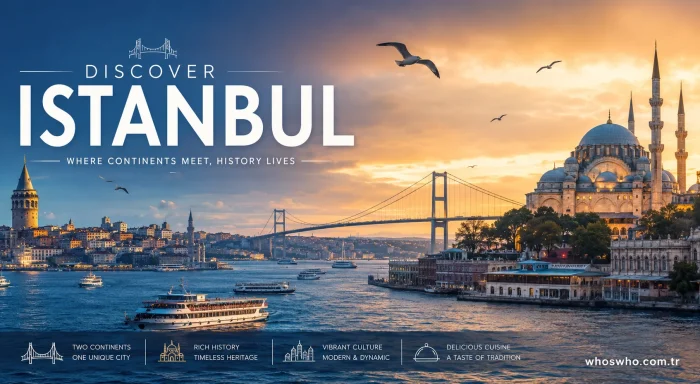
Sitting on the literal edge of two continents, İstanbul represents one of the world’s most enduring cultural crossroads. This transcontinental metropolis balances across the blue waters of the Bosphorus Strait, geographically linking Europe and Asia. For millennia, its unique positioning made it the ultimate prize for ambitious rulers, eventually serving as the capital for the Roman, Byzantine, and Ottoman Empires. Today, it operates as the ultimate cultural and financial heart of Türkiye, hosting a population that rivals many small nations. Visitors are drawn here by a skyline punctuated by elegant minarets and sleek modern skyscrapers, showcasing a city that honors its deep roots while sprinting toward the future. It is this collision of historical gravity, dizzying sensory experiences, and strategic global importance that keeps İstanbul at the forefront of international travel and trade.
Basic Information About İstanbul
| Factor | Detail |
|---|---|
| Country | Türkiye |
| Region | Marmara |
| Population | Approximately 16 million |
| Climate | Transitional Mediterranean and Oceanic |
| Area Size | 5,343 square kilometers |
| Main Industries | Logistics, Tourism, Finance, Textiles, Automotive, and Technology |
| Famous Foods | Simit, Döner Kebab, Balık Ekmek, Baklava, and Lahmacun |
| Time Zone | GMT+3 (Further details can be found on Time and Date İstanbul) |
| Area Code or License Plate Code | Area Codes: 212 (Europe), 216 (Asia) / License Plate: 34 |
History
The narrative of İstanbul begins long before it bore its current name, stretching back to ancient Thracian settlements and the eventual founding of Byzantium by Greek colonists in the 7th century BC. Its true transformation into a global titan occurred in 330 AD, when Roman Emperor Constantine the Great designated the city as his new capital, renaming it Constantinople. For more than a thousand years, it stood as the heavily fortified bastion of Christendom and the center of the Byzantine Empire, holding off countless sieges with its legendary Theodosian Walls.
The next monumental turning point arrived in 1453, when the young Ottoman Sultan Mehmed II breached these defenses, establishing the city as the Islamic crown jewel of his expanding empire. Under Ottoman rule, the city experienced a grand architectural and cultural renaissance, absorbing diverse traditions from across the Middle East, North Africa, and Europe. The collapse of the empire after World War I led to the birth of the modern Republic of Türkiye in 1923 under Mustafa Kemal Atatürk. While the political capital shifted to Ankara, İstanbul never lost its title as the nation’s true cultural, intellectual, and economic engine, transforming over the last century into a sprawling, hyper-modern mega-city.
Famous People
Athletes Born in İstanbul
- Arda Turan (Born 1987): A highly decorated football midfielder who grew up in Bayrampaşa and rose through the ranks of the Galatasaray Youth Academy. He went on to achieve global prominence in Spain, winning La Liga titles with both Atlético Madrid and FC Barcelona.
- Hidayet Türkoğlu (Born 1979): A legendary professional basketball player born in Bayrampaşa. He became one of the most successful Turkish players in NBA History, notably leading the Orlando Magic to the NBA Finals in 2009 and earning the NBA Most Improved Player Award.
- Cedi Osman (Born 1995): A prominent professional basketball player who began his career with the local powerhouse Anadolu Efes. He spent several successful seasons in the NBA, playing primarily for the Cleveland Cavaliers before returning to European leagues.
- Melih Mahmutoğlu (Born 1990): A sharp-shooting professional basketball player and longtime captain of Fenerbahçe – Beko. He has won numerous Turkish Basketball Super League titles and lifted the prestigious EuroLeague trophy in 2017.
- Volkan Demirel (Born 1981): A legendary football goalkeeper who served as the defensive anchor for Fenerbahçe for nearly two decades. Born in the Fatih district, he made over 500 appearances for his club and earned 63 caps for the Turkish National Team.
- Semih Erden (Born 1986): A commanding professional basketball center born in the Gaziosmanpaşa district. He achieved prominent domestic success with Fenerbahçe and Anadolu Efes, represented the Turkish National Team in major international tournaments, and played in the NBA for the Boston Celtics.
Singers and Musicians Born in İstanbul
- Sertab Erener (Born 1964): A phenomenal pop and classical crossover singer boasting a pristine vocal range. She made history for her country by winning the Eurovision Song Contest in 2003 with the anthemic track “Everyway That I Can.”
- Barış Manço (Born 1943): A pioneer of the Anatolian Rock movement and one of Türkiye’s most beloved public figures. His experimental tracks “Gülpembe” and “Dönence” blended traditional Turkish instruments with Western psychedelic rock.
- Teoman Yakupoğlu (Born 1967): A leading figure in Turkish alternative rock, known for his gritty vocals and cinematic lyricism. His tracks “Paramparça” and “İstanbul’da Sonbahar” became defining anthems for the city’s youth culture during the late 1990s and 2000s.
Actors and TV Personalities Connected to İstanbul
- Cem Yılmaz (Born 1973): Born in the Fatih district, he is widely regarded as the most successful stand-up comedian and satirical filmmaker in modern Turkish history. His career is deeply tied to the İstanbul Entertainment scene, producing hit movies like “G.O.R.A.” and “A.R.O.G.”
- Halit Ergenç (Born 1970): An acclaimed actor born in the city who achieved widespread international fame across eastern Europe and the Middle East. He is most celebrated for his brilliant portrayal of Sultan Suleiman the Magnificent in the historical Drama series “Muhteşem Yüzyıl“
- Çağatay Ulusoy (Born 1990): Born and raised in İstanbul, he won the Best Model of Turkey competition before transitioning into a massive acting career. He anchored globally successful television hits and Netflix productions such as “Medcezir,” “İçerde,” and “The Protector.”
- Sinem Kobal (Born 1987): A highly recognizable television actress born in İstanbul who began her professional career at a very young age. She achieved immense national fame as the leading star of hit youth and fantasy television series like “Selena” and “Küçük Sırlar.”
- Nuri Bilge Ceylan (Born 1959): A master Filmmaker and photographer born in İstanbul who stands as one of the most celebrated figures in contemporary world cinema. He won the prestigious Palme d’Or at the Cannes Film Festival for his visually stunning film “Winter Sleep.”
- Okan Bayülgen (Born 1964): A highly influential television presenter, actor, and director born in the city. He defined the late-night Talk Show format in Türkiye for over two decades with his iconic, sharp-witted programs produced entirely in İstanbul’s major media hubs.
Businesspeople and Entrepreneurs From İstanbul
- Rahmi Koç (Born 1930): A billionaire Businessman and former chairman of Koç Holding, one of the largest industrial conglomerates in the country. He has played a monumental role in shaping the financial landscape of the city, also founding the famous Rahmi M. Koç Museum.
- Güler Sabancı (Born 1955): The highly influential chairwoman of Sabancı Holding, a massive industrial and financial corporation headquartered in İstanbul. She is regularly featured on global lists of the world’s most powerful women and oversees Sabancı University.
- Nazan Ölçer (Born 1942): A prominent cultural entrepreneur and museologist who transformed the art management sector in the city. As the longtime Director of the Sakıp Sabancı Museum, she brought historic, world-class art exhibitions to the shores of the Bosphorus.
- Ali Koç (Born 1967): A prominent third-generation member of the Koç family who serves on the board of Koç Holding. He is a high-profile figure in daily city life, managing massive business portfolios and serving as the president of Fenerbahçe SK.
Tourism
The pull of İstanbul as a premier global travel destination lies in its ability to offer an immediate connection to the ancient world without sacrificing modern luxury. Visitors can seamlessly transition from exploring subterranean Byzantine structures to dining at cutting-edge, Michelin-starred rooftop restaurants overlooking the Bosphorus. The city caters to every demographic, offering bustling traditional bazaars for shoppers, deep historical architecture for academics, and vibrant nightlife districts for younger crowds. Navigating its historic neighborhoods feels like walking through an open-air museum where different centuries casually sit side by side.
Hagia Sophia
The Hagia Sophia stands as an absolute masterpiece of Byzantine engineering, dominated by a massive dome that for centuries was considered an architectural miracle. Originally constructed as a Christian cathedral in 537 AD under the direction of Emperor Justinian, it was converted into a grand mosque following the Ottoman conquest in 1453. The interior offers a striking visual dialogue between faiths, featuring glittering 9th-century golden Christian mosaics alongside colossal Ottoman calligraphic medallions.

Walking through its smooth marble imperial doors reveals a cavernous main hall bathed in an ethereal, golden light filtering through dozens of perimeter windows. The surrounding square is constantly humming with activity, filled with travelers gazing up at its rose-colored exterior walls and towering minarets. It remains an essential pilgrimage for anyone wishing to understand the complex ideological shifts that defined the history of Southeastern Europe.
- Entrance Fee: Approximately 30 USD (2026)
- Visiting Hours: 09:00 – 19:30
- Location: Sultanahmet Square, Fatih
Topkapı Palace
Topkapı Palace served as the administrative heart and courtly residence of the Ottoman Sultans for nearly four centuries, offering a fascinating glimpse into imperial life. Rather than a single monolithic building, the palace is designed as a sprawling series of residential pavilions, tranquil courtyards, and manicured gardens overlooking the meeting point of the Golden Horn and the Sea of Marmara. Visitors flock here to explore the secretive Imperial Harem, view the priceless Topkapı Dagger in the Imperial Treasury, and see sacred Islamic relics. The architecture showcases classic Ottoman design, utilizing intricate İznik tiling, stained-glass windows, and elaborate gilded calligraphic inscriptions. Walking through the quiet third courtyard offers an escape from the urban noise, surrounded by ancient cypress trees and marble fountains. It provides an unmatched narrative on how a nomadic empire transitioned into a highly sophisticated, multi-continental superpower.
- Entrance Fee: Approximately 45 USD (Includes Harem access, 2026)
- Visiting Hours: 09:00 – 18:00 (Closed on Tuesdays)
- Location: Cankurtaran, Fatih
The Blue Mosque (Sultan Ahmed Mosque)
Positioned directly opposite the Hagia Sophia, the Sultan Ahmed Mosque is widely celebrated for its elegant silhouette, featuring six unique minarets and a cascading series of domes. Built between 1609 and 1616 during the rule of Sultan Ahmed I, its popular global moniker stems from the tens of thousands of handmade blue İznik tiles lining its upper interior walls. These tiles depict traditional Ottoman floral patterns, lit up beautifully by natural light entering through more than two hundred stained-glass windows.

The exterior courtyard is the largest of all Ottoman mosques, designed to mirror the grand scale of the building’s interior prayer hall. Tourists visit to experience a fully active place of worship that simultaneously serves as a masterclass in classical Islamic architecture. The surrounding park comes alive during sunset, when the call to prayer echoes out from the minarets as the building is illuminated by soft floodlights.
- Entrance Fee: Free (Active place of worship)
- Visiting Hours: Open daily during non-prayer times
- Location: Sultanahmet, Fatih
The Grand Bazaar
The Grand Bazaar is one of the oldest and largest covered markets in existence, featuring a maze of over 60 vaulted streets and thousands of individual shops. Established shortly after the Ottoman conquest in the mid-15th century, it has functioned as the vibrant heart of Mediterranean trade for hundreds of years. The market is strictly organized by trade zones, leading shoppers through vibrant alleys dedicated entirely to gold jewelry, hand-woven carpets, Turkish leather, and traditional spices. The air inside is thick with the rich aroma of roasted Turkish coffee, sweet apple tea, and various exotic perfumes. It offers an intense shopping experience where bargaining is expected and treated as an art form by local shopkeepers. Exploring beneath its painted brick arches reveals hidden historic workshops where craftsmen still practice ancestral metalworking techniques.
- Entrance Fee: Free
- Visiting Hours: 08:30 – 19:30 (Closed on Sundays)
- Location: Beyazıt, Fatih
Basilica Cistern
The Basilica Cistern is a vast Underground chamber constructed in the 6th century during the golden reign of Byzantine Emperor Justinian to supply water to the imperial palaces. Known locally as Yerebatan Sarnıcı, this subterranean reservoir is supported by a forest of 336 grand marble columns salvaged from classical Roman temples. The atmosphere inside is hauntingly beautiful, characterized by low, ambient lighting, the soft sound of dripping water, and classical music playing softly in the background.

Visitors walk along elevated wooden pathways over shallow water where large carp swim between the bases of the columns. The primary highlights of the tour are two mysterious columns anchored by carved stone heads of Medusa, flipped upside down and sideways to deflect the ancient Gorgon’s mythological stare. It serves as an incredible testament to the advanced civil engineering and urban planning capabilities of the Byzantine Empire.
- Entrance Fee: Approximately 28 USD (2026)
- Visiting Hours: 09:00 – 22:00
- Location: Alemdar, Fatih
Economy
İstanbul functions as the absolute powerhouse of the Turkish economy, generating more than a third of the nation’s total gross domestic product. Its strategic location makes it a premier global logistics hub, anchored by the massive İstanbul Airport on the European side and Sabiha Gökçen Airport on the Asian side. The city’s maritime trade is handled by bustling shipping facilities along the Ambarlı Port complex and the newly developed Galataport, which welcomes international cruise commerce. A sprawling network of high-speed railway lines connects the city directly to central Anatolia and continental Europe via the Marmaray tunnel running beneath the seafloor of the Bosphorus.
The financial core of the city resides within the glittering skyscrapers of Levent, Maslak, and the newly established İstanbul Financial Center in Ataşehir, which centralizes major banking authorities. Manufacturing remains highly productive within several organized industrial zones on the outskirts, focusing heavily on textile production, automotive assembly, and consumer Electronics. In recent years, massive investments have poured into dedicated technoparks and software incubators, turning the city into a major hub for digital startups in the Middle East. Through this diverse industrial makeup, İstanbul drives the majority of Türkiye’s international trade, managing billions of dollars in export goods annually.
Famous Foods of İstanbul
- Simit
This circular, sesame-encrusted bread ring is the quintessential street food staple of daily life in İstanbul. Boasting a history that dates back to the early palace kitchens of the 15th-century Ottoman Empire, it is prepared by dipping yeast dough into molasses before rolling it in toasted sesame seeds and baking it to a deep gold. Locals typically purchase them fresh from iconic red-and-gold street carts during their morning commutes, often pairing them with a glass of black tea and Turkish cream cheese. It holds immense cultural value as an affordable, unifying food enjoyed daily by working-class commuters and corporate executives alike.
- Balık Ekmek
Translated literally as “fish and bread,” this iconic sandwich captures the coastal culinary heritage of the city perfectly. It features a fresh, grilled fillet of mackerel placed inside half a loaf of crusty white bread, topped simply with raw onions, crisp lettuce, and a squeeze of fresh lemon juice. The most famous place to eat this meal is directly along the bustling waterfront of Eminönü, where cooks prepare the fish on rocking, brightly lit boats moored right next to the Galata Bridge. It represents a timeless culinary ritual, offering affordable sustenance to millions of locals and travelers looking out over the Golden Horn.
- Sultanahmet Köftesi
These grilled, seasoned meat patties represent a beloved culinary tradition passed down through generations in the historic heart of the city. Made using a blend of ground beef, lamb, onions, and minimal spices, they are grilled over open charcoal to retain a juicy interior. Visitors traditionally enjoy them at historic restaurants operating around Sultanahmet Square, accompanied by a spicy pepper condiment and a glass of salty ayran. Its cultural importance lies in its adherence to traditional recipes, remaining largely unchanged for over a century amid a rapidly shifting urban food scene.
Sports Culture in İstanbul
Sports function as a core element of daily life in İstanbul, driving intense community loyalty and forming a major part of the city’s social fabric. The city is home to three of the world’s most passionate football clubs: Galatasaray, Fenerbahçe, and Beşiktaş. The historic rivalry between Galatasaray, based on the European side, and Fenerbahçe, based on the Asian side, is known internationally as the “Intercontinental Derby,” a fixture celebrated for its loud stadium atmosphere. These matches are held in world-class venues like the Rams Park, Ülker Stadium, and the waterside Beşiktaş Stadium, where fans regularly break international stadium decibel records with coordinated chants and massive choreographies.
Beyond football, the city is an important powerhouse in European basketball, with clubs like Anadolu Efes and Fenerbahçe Beko consistently competing for EuroLeague titles at the Sinan Erdem Dome. The municipality invests heavily in public sports infrastructure, encouraging residents to utilize running trails along the Bosphorus and coastal bike paths. From the crowded tea houses broadcasting local derby matches to the athletic clubs operating in every neighborhood, sports remain a key unifying topic across the city.
Interesting Facts About İstanbul
- It is the only metropolis in the world that spans across two distinct continents, Europe and Asia.
- While it serves as the ultimate economic and cultural engine of Türkiye, it is not the official political capital, a title held by Ankara.
- The city was known internationally as Constantinople for over sixteen centuries before being officially renamed İstanbul in 1930.
- It features the historic Tünel funicular railway line, which opened in 1875 and stands as the second-oldest subterranean urban rail system in the world after London.
- The city is world-famous for its massive, community-cared-for population of street cats, which are protected by residents and featured in global documentaries.
- Grand Author Agatha Christie famously wrote her classic mystery novel “Murder on the Orient Express” while staying inside the historic Pera Palace Hotel in İstanbul.
Frequently Asked Questions
- Where is İstanbul located?
İstanbul is situated in northwestern Türkiye, stretching across the strategic Bosphorus Strait. This unique geographic positioning places one half of the city within Europe and the other half within Asia, bordering both the Black Sea and the Sea of Marmara.
- What is İstanbul famous for?
The city is famous for its rich imperial history, unique transcontinental geography, and iconic architectural landmarks like the Hagia Sophia and the Blue Mosque. It is also celebrated globally for its vibrant culinary scene, traditional covered bazaars, and scenic ferry commutes across the Bosphorus.
- Which celebrities were born in İstanbul?
İstanbul is the birthplace of many internationally recognized figures, including global pop icon Tarkan, award-winning film director Nuri Bilge Ceylan, and actor Çağatay Ulusoy. It has also produced major basketball players like Hidayet Türkoğlu and prominent business leaders like Rahmi Koç.
- What are the best tourist attractions in İstanbul?
The most popular historic destinations include the Hagia Sophia, Topkapı Palace, the Blue Mosque, the ancient Basilica Cistern, and the bustling alleys of the Grand Bazaar. Visitors also highly recommend taking a scenic boat cruise along the Bosphorus Strait to view the waterfront mansions.
- Is İstanbul economically important?
Yes, İstanbul is the absolute financial and industrial heart of Türkiye, generating over a third of the entire country’s gross domestic product. It hosts the nation’s premier stock exchange, houses major multinational corporate headquarters, and controls vital international shipping channels.
- What foods is İstanbul known for?
The city is famous for its diverse street foods, including simit, balık ekmek, and traditional döner kebab. It is also celebrated for its historical local recipes, such as Sultanahmet köftesi, and traditional sweets like baklava and Turkish delight.
Short Link:
Link copied!