Who was Halit Akçatepe? Bio & Death

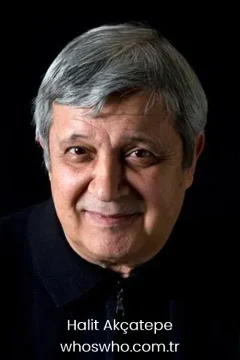
Halit Akçatepe was a beloved Turkish actor whose decades-long career in cinema theater and television made him one of the most iconic figures in the history of Turkish entertainment. He was born on January 1, 1938 in İstanbul,Turkey. his zodiac sign was Capricorn. He died on March 31, 2017 at the age of 79.
Halit Akçatepe's Biography Score and Ranking Status on Our Website
The Turkish actor and theater artist Halit Akçatepe, whose full name is Mustafa Halit Akçatepe, established a permanent and multigenerational profile within contemporary Turkish cinema History, commercial television serials, and traditional stage formats. Born on January 1, 1938, in the Üsküdar district of İstanbul, Türkiye, he grew up in a prominent family deeply rooted in the performing arts. His ancestral background includes elite historical lineages, tracing paternally back to the Ottoman Empire’s Tulip Period Grand Vizier, Nevşehirli Damat İbrahim Paşa. Balancing his family’s rich artistic legacy with rigorous institutional school paths, he successfully transitioned from a child-actor into one of the most beloved and character-adaptive leading comedy talents within the Mediterranean Entertainment landscape.
Academic Foundations and Early Child-Actor Transition
Halit Akçatepe spent his early childhood navigating the artistic environments of theatrical rehearsals, as both of his parents were professional actors. His father, Sıtkı Akçatepe, was a veteran stage and cinema performer, while his mother, Leman Akçatepe, also maintained an active acting presence in early Turkish cinema. Despite this strong exposure, his father structurally opposed a full-time artistic path for his son during his youth due to economic instabilities in the post-war sector. To build an analytical professional future, his family enrolled him in elite educational tracks, leading to his graduation from the prestigious Saint Benoit French High School in İstanbul. Following his academic studies, he fulfilled a technical 1.5-year compulsory military service tracking at Anıtkabir in Ankara in 1959.
His technical introduction to professional film sets materialized long before his high school studies. In 1943, at the age of five, a local film Director requested a child actor from Sıtkı Bey, which led to Halit Akçatepe making his formal debut in the feature film Dertli Pınar. Rather than pursuing institutional actor training, he refined his delivery entirely via practical experiences, famously stating later that he held no connection to traditional conservatory training methods. He performed as an independent child and adolescent performer in various black-and-white features before prioritizing professional stage performance, joining local theater ensembles to master the timing required for traditional tuluat (improvisational) comedy tracks.
The Arzu Film Era and Mainstream Structural Success
In the early 1970s, Halit Akçatepe secured a permanent footprint in the mainstream recording industry by collaborating with director Memduh Ün on the Drama film Üç Arkadaş (Three Friends) alongside Hülya Koçyiğit. However, his definitive professional breakthrough and regional recognition occurred through his structural integration into Ertem Eğilmez’s legendary production house, Arzu Film. He achieved national stardom in 1972 through his performance as the shepherd in the comedy-manuscript Tatlı Dillim. The project established his specific archetype: the mischievous, sharp-witted, yet deeply compassionate and loyal protagonist who consistently aligns with ethical defense lines, a face that became universally trusted by domestic viewers.
This commercial success led to consecutive leading performances in an elite ensemble cast that shaped the golden age of Turkish family comedies. He starred opposite his long-term professional partner Kemal Sunal and legendary actor Tarık Akan in blockbuster hits including Oh Olsun (1973), Yalancı Yarim (1973), Salak Milyoner (1974), and Mavi Boncuk (1974). His performance as Gayret in Köyden İndim Şehire (1974), where his character systematically calculated gold coins alongside siblings played by Sunal, Zeki Alasya, and Metin Akpınar, functioned as a major plot engine exploring internal migration challenges in northwestern Türkiye. He also delivered a heavy dramatic performance in the heartbreaking social realism feature Canım Kardeşim (1973), which remains highly analyzed by cinema academics.
The Phenomenon of Güdük Necmi and Süt Kardeşler
The absolute peak of his mainstream cinematic dominance and historical legacy materialized in 1975 when he spearheaded the cast of Hababam Sınıfı (The Chaos Class), an adaptation of Rıfat Ilgaz’s iconic novel directed by Ertem Eğilmez. He delivered a transformative performance by portraying the legendary student character Güdük Necmi. His character’s intense, humorous sibling-style rivalry and endless tactical pranks directed at İnek Şaban, performed by Kemal Sunal, and his complex interactions with the strict vice-principal Kel Mahmut, played by Münir Özkul, became a massive cultural phenomenon. The structural framework of the series allowed him to share screen time with his real-world father, Sıtkı Akçatepe, who portrayed the historical teacher Paşa Nuri. He maintained this iconic role across multiple consecutive hit iterations, including Hababam Sınıfı Sınıfta Kaldı and Hababam Sınıfı Uyanıyor.
Following this massive box-office dominance, Halit Akçatepe consolidated his comedic profile in 1976 by portraying Ramazan in the cult comedy-horror feature Süt Kardeşler (The Milk Brothers). In this narrative, his character shared complex, frantic household sequences opposite Kemal Sunal’s Şaban and faced structural authority lines under Gulyabani-haunted premises, sharing scenes with Adile Naşit and Şener Şen. His filmography expanded over decades to incorporate over 100 features, containing his secondary role as the trickster in Şabanoğlu Şaban (1977) and his regular television appearances in long-running 1990s domestic drama series including Bizimkiler and the hit family comedy Kaygısızlar. In his later years, he returned to mentor new generations by appearing as a legacy character in modern sequels like Hababam Sınıfı Üç Buçuk (2005).
Physical Profile, Marital Status, and Lifelong Legacy
Halit Akçatepe stood at a height of 1.65 meters (5 feet 5 inches) and maintained a weight of approximately 62 kilograms (136 lbs) during his primary active performance years. Regarding his marital status, he was legally divorced at the time of his passing, having entered two historical marriages. He finalized his first marriage with Tülin Akçatepe in 1963, and the couple shared two daughters, Itır Akçatepe (born 1964) and Ebru Akçatepe (born 1968), before completing a legal divorce in 1981. He entered his secondary marriage with Rezzan Akçatepe (née İpekçi) in 1999, a union that attracted continuous Media commentary due to a 39-year age variance. The couple shared one daughter, Günsu Akçatepe (born 2001), before their marriage concluded in divorce in 2009.
His permanent financial profile was sustained by physical and digital catalog residuals, late-career television production contracts, and institutional honors, including receiving the Lifetime Honorary Award at the Antalya Golden Orange Film Festival in 2011. His professional journey concluded on March 31, 2017, when he passed away at the age of 79 due to complex heart and respiratory failure at a specialized medical institution in Ataşehir, İstanbul. His remains were buried within the historical grounds of the Karacaahmet Cemetery. His artistic memory remains institutionalized across Turkish cultural history as an enduring symbol of authentic human warmth, clever comedic timing, and multigenerational cinematic excellence.
Halit Akçatepe – Frequently Asked Questions (FAQ)
Check out our 1938 born celebrities page to discover Halit Akçatepe and other notable people born in the same year.