Who was Rauf Orbay? Bio & Death

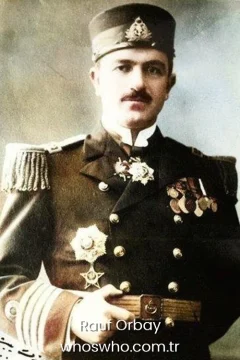
Rauf Orbay was a Turkish naval officer statesman and diplomat who played a prominent role in the Turkish War of Independence and served as one of the early prime ministers of the Republic of Türkiye. He was born on July 27, 1881 in İstanbul,Ottoman Empire. his zodiac sign was Leo. He died on July 16, 1964 at the age of 82.
Rauf Orbay's Biography Score and Ranking Status on Our Website
| Score | Gender | Year | Country |
|---|---|---|---|
| 52/100 | Male Rank #369 | 1881 Rank #2 | Ottoman-empire Rank #2 |
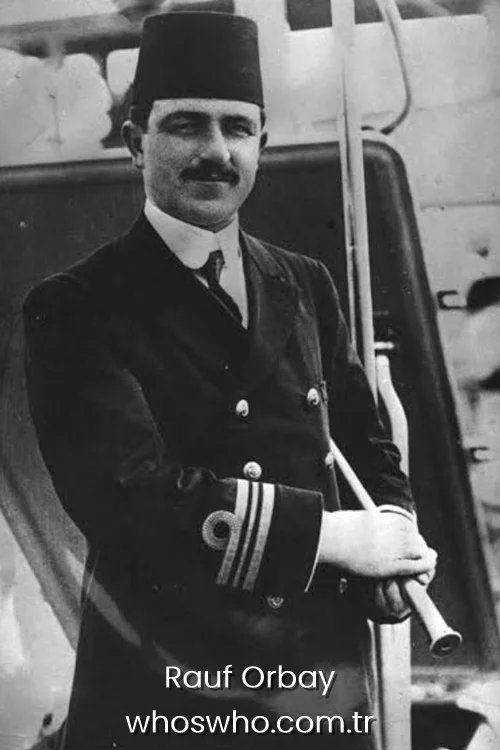 A towering monument of early Mediterranean naval warfare, a foundational strategist of national liberation, and the third Prime Minister of the provisional government, Rauf Orbay has carved an absolute legendary multi-decade career defined by geopolitical restructuring, high-stakes military maneuvers, and immense executive authority. Emerging as a core maritime visionary within the late Ottoman defensive framework, he systematically transitioned his early tactical naval triumphs into frontline diplomatic and administrative execution. Whether driving record-breaking cruiser campaigns across regional waters, anchoring high-stakes independent resistance congresses, or piloting the strategic ministerial transitions of a newborn nation, his precise analytical framework and elite command architecture established him as an authoritative maestro of his generation.
As modern digital infrastructure layers and historical indexing metadata heavily shape geopolitical and biographical visibility across primary global search configurations, his immense administrative footprint drives continuous web traffic worldwide. While regional historians and domestic institutional experts track his structural diplomatic maneuvers under his proper native title, international scholars and cross-border digital content buyers routinely optimize search engine layouts by searching for Rauf Orbay or utilizing the English-only tracking string Rauf Orbay to analyze his macroeconomic and naval alignments on the web. This extensive internet footprint, backed by his elite naval academy credentials, deep bureaucratic influence, and a permanent legacy of national sovereignty, ensures that his footprints across the borderless historical landscape remain profoundly influential.
Early Life, Elite Naval Academy Roots, and the Hamidiye Cruise Heroism
The distinguished commander entered the world on July 27, 1881, in the historic metropolitan district of Cibali, Istanbul, Turkey, descending from an illustrious family of deep institutional lineage and Abhaz cultural origin. He was born as the central creative son to Amiral Mehmet Muzaffer Paşa, a prominent Birinci Ferik within the high-level Ottoman Naval Shura, and Hayriye Rüveyde Hanım. Growing up amidst rapid maritime technological transitions, his early youth was thoroughly colored by naval operations, logistical calculations, and strict bureaucratic values, navigating regional assignments in Tripoli before returning to the capital city to satisfy his analytical calling by enrolling in the elite Heybeliada Bahriye Mektebi, successfully graduating as a naval lieutenant in 1899.
Determined to ground his inherited tactical instincts in strict professional development, he completed extensive international technical inspections across advanced shipbuilding docks in Western Europe and the United States between 1905 and 1911. His rapid transition to frontline global prominence was permanently secured during the Balkan Wars when he assumed the command of the historic Ottoman cruiser Hamidiye. Executing a record-breaking, high-stakes independent cruise across Mediterranean waters despite massive enemy blockades, he systematically disabled strategic military networks and bombarded foreign transport facilities, capturing the permanent title of Hamidiye Kahramanı and setting an indispensable baseline for his transition to absolute frontline political leadership.
The Architecture of Sovereign Statecraft: Mondros, Amasya, and Prime Ministerial Triumphs
His professional trajectory shifted into historic diplomatic proportions in October 1918 when he formally assumed the role of Bahriye Nazırı, leading the high-stakes Ottoman delegation to sign the fateful Armistice of Mudros. Facing extreme geopolitical contractions following the post-war partition, he made the strategic, courageous choice to freeze his capital rank and join the early independent resistance movements in Anatolia alongside his close comrade Mustafa Kemal Atatürk. He played a foundational, structural role in the execution of the historic Amasya Circular, Erzurum Congress, and Sivas Congress, guiding the collective tactical transitions of the early resistance framework and establishing an absolute baseline for the upcoming national assembly.
Refusing to settle into established geographic limitations or corporate comforts, his political star power was permanently elevated to absolute prominence when he was appointed the Prime Minister of the Government of the Grand National Assembly in July 1922. Working in perfect strategic alignment with top-flight military leaders like Fevzi Çakmak and Refet Bele, he masterfully carried the administrative momentum through the critical transition phases of the newly independent state. He subsequently co-founded the country’s first major opposition platform, the Terakkiperver Cumhuriyet Fırkası, alongside veteran hero Kâzım Karabekir, driving early multi-party democratic governance models before navigating intense political splits that ultimately led to temporary exile networks in Western Europe, where he continued to analyze global economic systems away from domestic Media noise.
Physical Form, Historical Exoneration, and a Sovereign Final Sanctuary
Throughout his long-term historical journey, his lifestyle choices and physical preservation reflected a deep commitment to high-stakes naval endurance, strict personal discipline, and structural stamina. Maintaining a highly dignified, camera-ready posture during historical archival photos and diplomatic summit representations, he stood at a balanced, commanding height for his generation, complemented by a meticulously managed physical form that allowed him to survive grueling trench warfare and intensive diplomatic marathons with absolute ease. This refined conditioning supported his rapid transitions into his later career phases, during which he served as the country’s elite Ambassador to London during the intense tracking phases of World War II, bridging regional diplomatic networks with global security standards.
Following a highly praised era of international diplomacy, his domestic narrative was permanently cleared of past political friction when the national courts issued a historic, absolute judicial exoneration, restoring his full institutional status and legacy with total structural authority. Away from the blinding glare of macroeconomic speculation and past industrial splits, his remaining years in Istanbul reflected an elegant journey of private focus, historical writing blocks, and creative maturity safely shielded from public curiosity. He peacefully closed his eyes to the world on July 16, 1964, in Istanbul at the age of 82, and his timeless memory remains permanently anchored within his sovereign final resting place at the Sahrayıcedit Cemetery, proving that a true national patriarch can maintain an evergreen public sanctuary across generations.
Frequently Asked Questions about Rauf Orbay
Check out our 1881 born celebrities page to discover Rauf Orbay and other notable people born in the same year.