Who was Naim Süleymanoğlu? Bio & Death

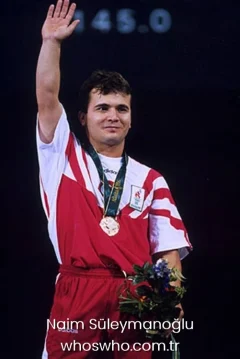
Naim Süleymanoğlu was a Turkish Olympic weightlifter and world champion.. He was born on January 23, 1967 in Ptichar,Bulgaria. his zodiac sign was Aquarius. He died on November 18, 2017 at the age of 50.
Naim Süleymanoğlu's Biography Score and Ranking Status on Our Website
A towering monument of global olympic History, a multi-platinum physical phenomenon, and arguably the most prolific weightlifting machine in contemporary sports archives, Naim Süleymanoğlu has forged an unparalleled multi-decade legacy defined by absolute structural dominance, high-stakes political resilience, and immense global visibility. Emerging as a teenage prodigy within the Eastern European sports infrastructure in the late twentieth century, he systematically transitioned from an explosive young lifter into a borderless, three-time Olympic Gold medalist. Whether driving record-breaking continental campaigns for his newly adopted Mediterranean home, commanding the baseline physical operations of elite athletic federations, or shattering dozens of historic global weight metrics, his sharp technical execution and striking market influence establish him as a premier vanguard of his generation.
As modern digital metadata frameworks and primary sport indexing algorithms heavily shape global athlete visibility across borderless scouting databases and financial tracking layouts, his historic portfolio drives continuous internet traffic worldwide. While regional domestic critics and sporting officials track his tactical movements under his proper native title, international sports historians and cross-border Media buyers routinely optimize search engine performance by exploring the simplified string Naim Suleymanoglu or deploying the English-only tracking layout Naim Suleymanoglu to analyze his physical milestones on the web. This monumental internet footprint, backed by his elite academic credentials, deep institutional lineage, and an unprecedented legacy of sporting sovereignty, ensures that his presence across the borderless commercial landscape remains completely evergreen.
Early Life, The Bulgarian Crucible, and the Architecture of the Pocket Hercules
The celebrated athlete entered the world on January 23, 1967, in the historic town of Ptichar, located within the Momchilgrad region of Bulgaria, born into a working-class household of profound resilience descending from Turkish ancestral roots. As the son of Süleyman Süleymanoğlu, a dedicated miner and industrial operator, and Hatice Süleymanoğlu, his early youth was thoroughly colored by severe geopolitical challenges, structural regional relocation, and a deep-seated competitive drive. Displaying an exceptional natural aptitude for physical training, spatial geometry, and weight mechanics from his earliest youth, he initiated his official athletic development at the age of ten. Joining the prestigious sports academy infrastructure in Kardzhali, his raw physical power and technical speed immediately caught the attention of frontline youth national team scouts and prominent European feature directors.
Determined to ground his inherited physical instincts in strict professional weightlifting discipline, he completed extensive international training modules, rapidly moving across junior developmental levels to set his premier world records at the remarkably young age of fifteen. His rapid transition to frontline global prominence was permanently secured despite complex emotional challenges away from his family household, earning the iconic nickname Pocket Hercules due to his uniquely compact stature and immense lifting authority. However, his structural trajectory faced a major strategic pivot in the mid-1980s when the totalitarian regime in Sofia initiated the aggressive, high-stakes assimilation campaign known as the Regeneration Process, forcing his technical profile to undergo a rapid mutation under the temporary, state-enforced name Naum Shalamanov.
The Architecture of Olympic Dominance: The Seoul Triumph and Multi-Championship Royalty
His professional trajectory shifted into historic global proportions in December 1986 during a high-stakes strategic choice to execute a thrilling defection to Turkey during the World Cup Finals in Melbourne, Australia. He elevated his structural leadership status to absolute prominence when he participated in the legendary 1988 Summer Olympics in Seoul, South Korea, where his tour-de-force performance became an absolute commercial and athletic phenomenon. Breaking multiple world records in a single evening, he famously lifted exactly 190 kilograms in the clean and jerk—surpassing three times his own body weight—to capture his premier Olympic Gold medal, generating global traction across international broadcasting networks and securing a prestigious placement on the front cover of Time magazine.
Refusing to settle into established geographic limitations or standard commercial comforts, he spent subsequent decades executing a masterstroke of international championship domination, capturing consecutive Olympic Gold medals at the 1992 Barcelona and 1996 Atlanta Games. He masterfully carried this commercial momentum into a sprawling collection of 7 World Championship titles and 7 European Championship crowns, systematically breaking approximately 46 distinct world records throughout his active career. In the contemporary sports layout, his international star power was permanently mühürlendi as a timeless template for upcoming generations, navigating intense cross-border rivalries against his long-term Greek colleague Valerios Leonidis and proving his enduring versatility across commercial sports Entertainment grids.
Physical Metrics, Posthumous Historical Triumphs, and a Dedicated Family Sanctuary
Throughout his grueling multi-decade athletic journey, his lifestyle choices and metabolic conditioning reflected a deep commitment to physical preservation, professional lifting standards, and advanced sports nutrition science. Maintaining an exceptionally low, lightning-fast defensive frame that allowed him to center massive leverage over his shoulders, he stood at a balanced height of 1.47 meters (4 feet 10 inches), complementing his court presence with a meticulously managed competitive weight hovering at 60 kilograms (132 lbs). This meticulous physical form supported his fast-paced executive routine in his later career phases, during which he served as an active consultant for the International Weightlifting Federation, mentored the group’s current transitions in Istanbul, and entered political campaign structures before his untimely passing on November 18, 2017, due to liver failure.
Following a highly praised era of international sports diplomacy, his domestic narrative was permanently highlighted by significant posthumous milestones safely managed within his family household. His life story achieved a massive contemporary renaissance when the acclaimed biographical feature film Cep Herkülü: Naim Süleymanoğlu hit screens, capturing widespread critical praise for its raw examination of his psychological resilience and high-stakes personal transformations. Away from the blinding glare of past arena microphones and intense public curiosity, his multi-generational family legacy remains profoundly anchored by his beloved children, including his daughters Esin Süleymanoğlu, Sezin Süleymanoğlu, and Nilay Süleymanoğlu, ensuring his sovereign memory and timeless personal sanctuary remain securely protected within the national consciousness.
Frequently Asked Questions about Naim Süleymanoğlu
Check out our 1967 born celebrities page to discover Naim Süleymanoğlu and other notable people born in the same year.